

The latest government plan may not be everything that hemp advocates and cannabis enthusiasts had hoped for, but there is cause for cautious optimism, at least for the some of the hemp farmers.
The revamped regulatory framework, released by the Departments and quietly publicized by Agriculture Minister John Steenhuisen, brings notable changes for industrial hemp production while simultaneously delegating authority over higher THC products to the Health Department.
What does that mean in practice? Let’s break it down.

Key Regulatory Changes: A Friendlier Environment for Hemp
The new guidelines represent a clear pivot in favour of industrial hemp.
Amendments to the Plant Improvement Act now redefine industrial hemp by raising the tolerated tetrahydrocannabinol (THC) content to 2% a welcome upgrade compared to previous, more restrictive limits . But honestly still a bit low, As far as I remember it makes the THC to help against the sun if the info correct?
Moreover, significant hurdles that once created a heavy administrative and financial burden such as the requirement for expensive fencing, strict size (50 hectare) restrictions, and the need for police clearance certificates, have been scrapped.
These changes streamline the process of obtaining hemp permits, promise reduced production costs, and eliminate sources of corruption that occasionally haunt permit applications.
For hemp farmers, this should translates into a far more accessible and competitive agricultural sector with fewer bureaucratic obstacles.
They make it out to be that farmers who might previously have been deterred by costly infrastructure or lengthy clearance times can now explore hemp cultivation without bending under such weighty regulatory demands.
In effect, small and emerging producers are given a fairer chance at joining an industry poised for growth, not only locally but on an export level as well.
But the cost to entry is still way above what I think a lot of people are thinking for a small-scale, experimental hemp farm, you might need an initial capital outlay ranging from roughly R375,000 to R750,000
More ambitious commercial projects could require substantially more, particularly if you plan to invest in advanced agronomy solutions to counter local environmental challenges.
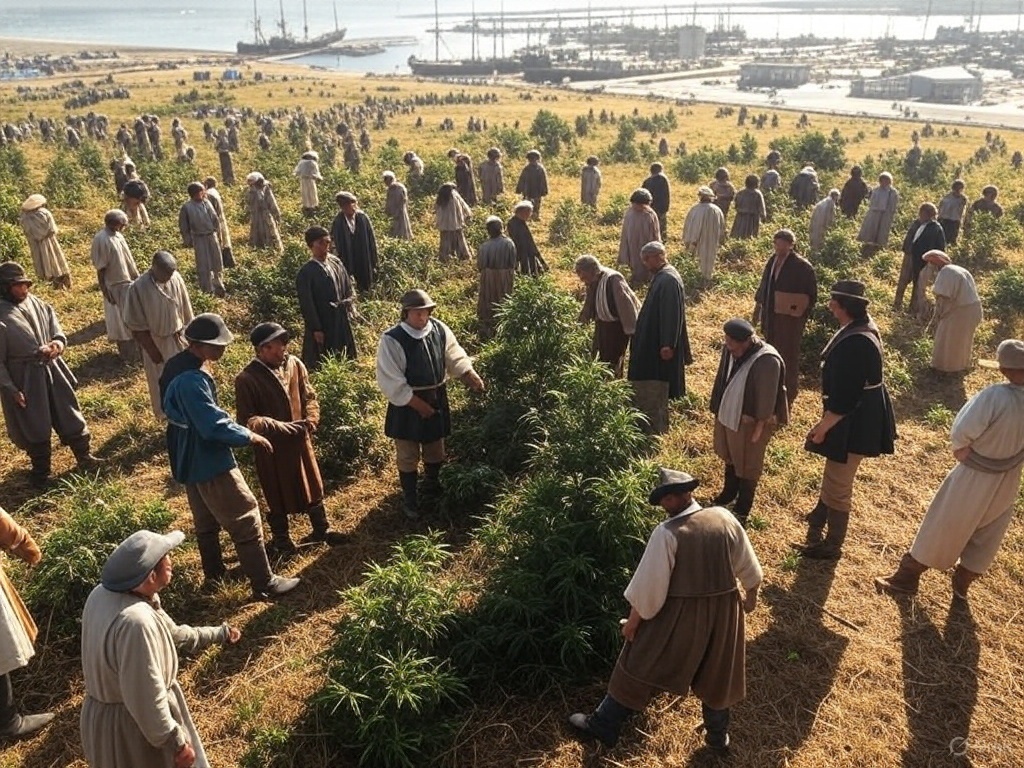
What It Means for Aspiring Hemp Farmers
If you dream of cultivating hemp on your farm, the revised framework has several notable benefits:
- Increased THC Flexibility: With a permissible THC level of up to 2%, farmers can now explore a wider range of hemp varieties. This expanded genetic space may not only improve yields in the challenging conditions of the Western Cape but also allow farmers to develop cultivars that enhance fiber, seed, and even medicinal innovation.
- Reduced Operational Costs: Dropping fencing requirements and large-scale area restrictions immediately cuts overhead costs. Funds that would once have been earmarked for compliance can now be reinvested into better agronomic practices, research, and value-added processing.
- Streamlined Permit Process: Elimination of police clearance certificates reduces the red tape and potential slowdowns from bureaucratic bottlenecks. In the past, these clearance requirements sometimes provided entry points for undue interference and corruption. The removal of these barriers represents a significant win for transparency and efficiency.
- Government Support: The Agriculture Department is extending financial support via established initiatives like the Comprehensive Agricultural Support Programme, Blended Finance, and the Agri BEE Framework. These measures are intended to ultimately foster both the scale and sustainability of hemp production across the country.
Overall, these adjustments mean that if you want to be a hemp farmer, the new plan provides a more predictable and supportive regulatory pathway laying a stronger foundation for building a sustainable, profitable operation.
The Conundrum for Private Cannabis Clubs
On the flip side, while hemp now gets a clear, healthier regulatory boost, the higher THC spectrum remains under the control of the Health Department.
This delegation is crucial: higher THC limits—which are vital for products typically consumed through private cannabis clubs, are still closely monitored by stringent public health measures.
The result? Private cannabis clubs that depend on access to a broader range of cannabis varieties may continue to confront a labyrinth of health department regulations.
For those invested in the private cannabis club model, the implications are mixed.
On one hand, these clubs have historically operated in a legal “grey zone,” benefitting from lenient oversight in practice but facing constant regulatory uncertainty.
With higher THC regulations now squarely in the hands of the Health Department, expect tougher enforcement, additional licensing hurdles, and possibly even a slower pace of change toward full legalization or decriminalization of recreational cannabis use.
Many stakeholders have expressed disappointment that the plan doesn’t extend similar operational relaxations, like those enjoyed by hemp growers to the higher THC cultivated crops.
Instead of moving toward a more integrated framework that supports both industrial hemp and private cannabis clubs, the regulatory strategy is effectively bifurcating the market.
The agricultural wing enjoys streamlined, cost-effective support while innovative cannabis clubs remain mired in a system governed by public health imperatives.

Broader Implications and the Road Ahead
The current regulatory landscape reflects a cautious government approach, one that embraces the economic and environmental potential of hemp while tamping down on what they still considered a risk—namely, high-THC cannabis products and their associated consumer environments.
For hemp farmers, this clarification and relaxation are game changers: you now have a well-defined, less burdensome pathway toward entering an industry that promises exponential growth, increased exports, and transformative local economic benefits.
However, cannabis clubs might have to wait for a secondary wave of regulatory reform. The delegation of high-THC product oversight to the Health Department could mean that any future easing of restrictions for cannabis clubs will be subject to the same stringent safeguards designed to protect public health—especially concerning nutritional content, marketing toward vulnerable populations, and quality controls on consumable products.
What does all this mean for the industry as a whole?
There is potential for a more sustainable agrifood system in South Africa, but only if there is coherence between the agriculture and health sectors.
Greater synergy and consultative reform are essential if the promise of the National Cannabis Master Plan is to be fully realized—not just for hemp farmers but for every stakeholder in the cannabis value chain.

Final Thoughts
In summary, if you’re a prospective hemp farmer, the new guidelines mark a significant improvement: fewer barriers, reduced costs, and enhanced support from the state.
Yet, for those looking to push the envelope with private cannabis clubs or higher THC cannabis for recreational and broader medicinal purposes, the challenges remain formidable as such products continue to be subject to the more rigorous oversight of the Health Department.
This split approach is a reminder that policy reform is rarely uniform, often emerging as a patchwork of successes and ongoing challenges.
As the government consults with industry stakeholders and refines its strategy, the hope remains that more inclusive reforms will ultimately bridge the gap between these two interrelated yet distinctly regulated segments of the cannabis market.
What do you think? Are these changes enough to truly transform South Africa’s cannabis landscape, or do the disparities between hemp and high-THC oversight signal deeper fissures in policy reform?
The debate continues, and the industry’s evolution remains one of the country’s most watched—and contested stories for the coming years.