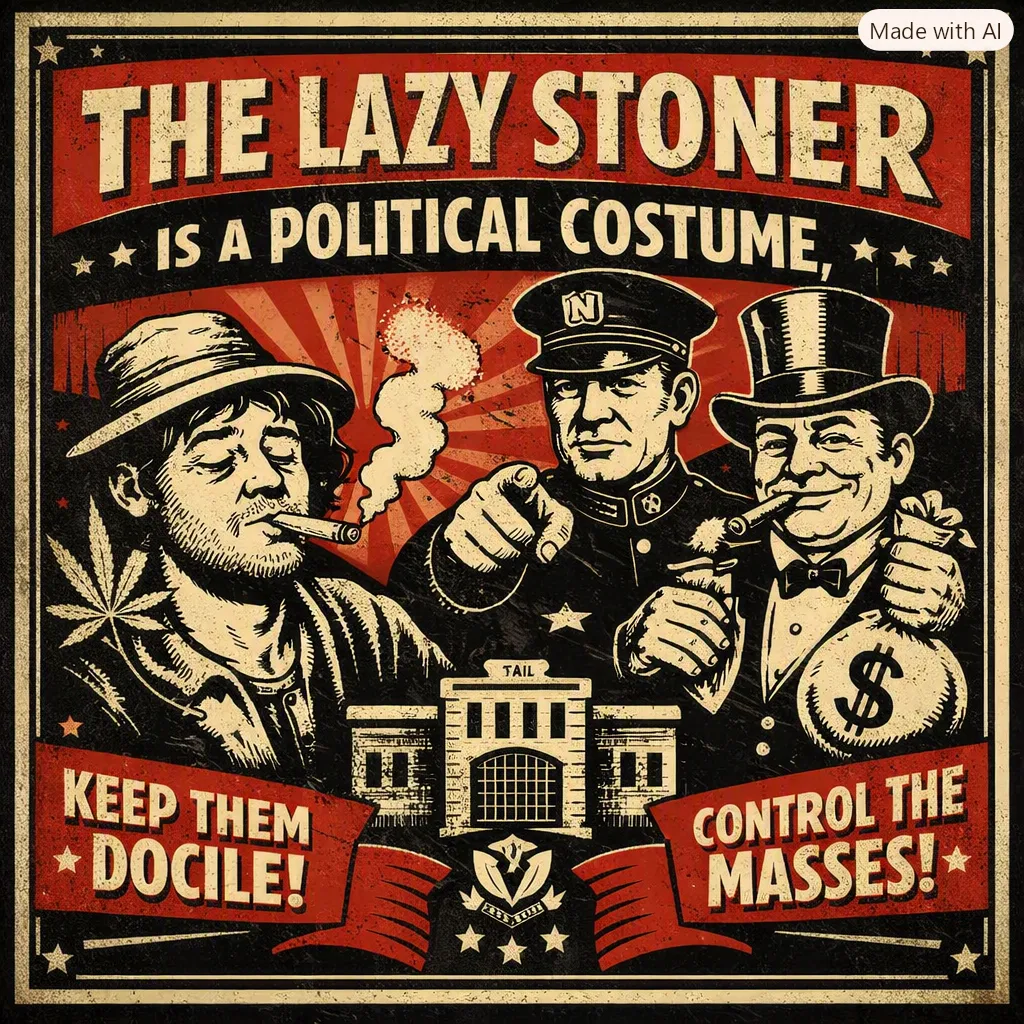
The Lazy Stoner: A Political Costume Disguised as a Diagnosis
The “lazy stoner” is one of the most durable dagga myths because it feels obvious: someone slumps on a couch, snacks, stares. History sold that image. Current science does not confirm it as a trait of cannabis use.
Amotivational syndrome was never a validated disorder.
It was a 1960s and 70s clinical impression that hardened into policy language.
Controlled work since then has repeatedly failed to find a stable, cannabis caused collapse of drive in regular users who are not in the grip of cannabis use disorder.
How the myth was built
The story did not start as “weed makes you unproductive.” It started as racial and political threat, then softened into slacker comedy.
1930s United States: Harry Anslinger and Hearst era press first sold cannabis as a violence and lust drug aimed at Mexican workers, Black jazz musicians, and “white women.” Laziness was already in the mix as a smear of immigrant labour.
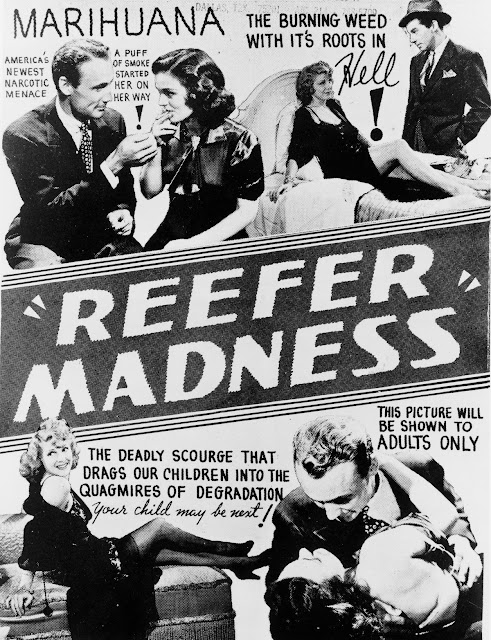
Reefer Madness era: The plant was framed as madness and crime. When that panic aged badly, the caricature was downgraded from killer to burnout.
Nixon and the counterculture: The slacker hippie was useful. Associating anti war youth and Black communities with drugs made enforcement a political tool. John Ehrlichman’s later account of that strategy is widely cited; treat it as a political confession, not lab data.
South Africa / dagga: Colonial and apartheid era writing already tied dagga to “unsteadiness” and “incapacity for exertion” among African mine workers while some managers quietly noted the opposite.
The same plant was moralised as racial character, not measured as a drug effect.
The couch lock cartoon is the late, family friendly version of that smear: less “assassin of youth,” more “won’t get a job.”
What the better studies actually show
Two lines of evidence matter: *when people are high right now, and *who they are when they are not.
Everyday life, frequent users (2024)
University of Toronto researchers pinged 260 people who used cannabis at least three times a week, five times a day for a week (3,701 observations).
- Motivation and willingness to expend mental effort did not drop in a meaningful way when they were high versus not high.
- No next day “weed hangover” on emotion or motivation.
- In certain moments, things like personal order or impulse control can dip. That can show up as temporary messiness, but it’s not the same as abandoning your goals or losing motivation.
- Very frequent users were, in some measures, more motivated than less frequent users.
Lead author Michael Inzlicht’s plain sentence: you can be hard working, motivated, and a chronic cannabis user.
Users vs non users, including adolescents (2022 CannTeen)
Cambridge / UCL / King’s compared adult and adolescent users (often 3 to 4 days a week, some daily) with matched non users on apathy, anhedonia, effort for reward tasks, and reward system brain response.
- No group difference in apathy or effort based motivation.
- Users scored slightly lower on anhedonia (they reported enjoying pleasure at least as well).
- Adolescents in that design were not more vulnerable than adults on these motivation measures.
Reviews, not headlines
A 2023 review of recent acute vs non acute work:
- Short term, high dose lab intoxication can briefly lower a person’s willingness to work for money but only within that narrow window of being high.
- Non acute / regular use studies generally do not support a chronic amotivational syndrome.
- There is a signal linking cannabis use disorder / dependence with apathy that is a clinical pattern, not “anyone who uses dagga.”
So the honest split is: a joint can make effort feel less worth it for a few hours. That is not the same as cannabis rewriting personality into sloth.
What remains uncertain
1. Short term vs long term.
Strong THC in a lab can make people put in less effort while they’re high. But when you follow real users through their day, you don’t see much of that.
Dose, product, tolerance, and the situation all matter.
There isn’t one “curve” that fits every joint.
2. Who gets studied.
People who can show up for a week long diary study are not the same as people with chaotic use, poverty, depression, or untreated ADHD.
That mix changes the picture.
3. Dependence is not just “use.”
Apathy shows up more in people who are struggling with their use not in people who simply use often.
Mixing those groups together is how the myth stays alive.
4. Young brains.
Studies that include teens look mostly reassuring for motivation.
But that does not mean heavy teen use is safe.
Psychosis risk, thinking skills, and school paths are separate issues.

5. Self report and culture.
Stigma, drug testing, and the old idea that “stoners are lazy” can shape how people act and how they describe themselves.
6. Feeling sedated is not your personality.
Strong THC, lots of myrcene, and late night use can make you feel heavy or sleepy. That’s chemistry and timing not your character.
Science here is better than the sitcom, not finished.
If someone is stuck, sleeping through life, and smoking all day, cannabis may be part of the loop. It is not proof that the plant invented the loop.
A cleaner frame
| Claim | Status |
|---|---|
| Cannabis users are inherently unmotivated | Not supported by recent controlled and diary work |
| Being high can reduce short term effort for small rewards | Supported in some acute lab studies |
| “Amotivational syndrome” as a distinct disease | Never validated |
| Heavy dependent use can co travel with apathy | Plausible; not the same as any use |
| The lazy stoner stereotype was built to serve power not to describe real people. | Well documented |
The plant can slow a Tuesday afternoon. Prohibition needed a type of person. Those are different facts.
Bottom line: treat dagga like a tool with a half life, not a destiny. If drive is gone, look at sleep, depression, dose, timing, and whether use has become the job.
Do not outsource that diagnosis to a 1970s cartoon.