
A Step Forward or Just Another Hurdle?
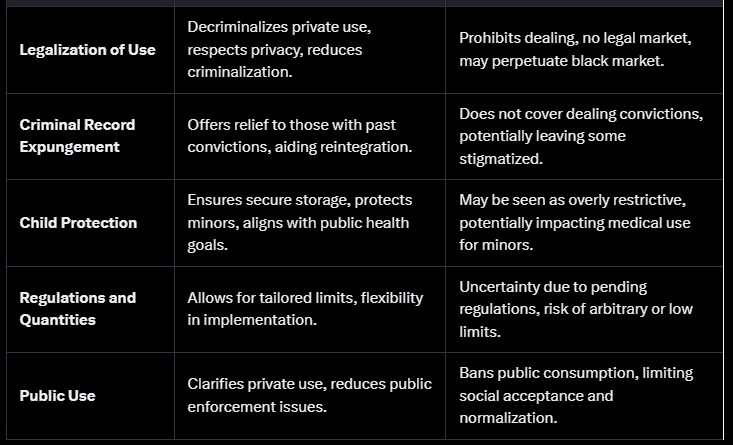
The Cannabis for Private Purposes Act, 2024 has sparked mixed reactions within the cannabis community in South Africa. While some see it as a step forward, others are sceptical about its true impact. Is this Act genuinely progressive, or is it just another bureaucratic hurdle?
Key Provisions
- Private Use and Possession:
- Adults (18+) are legally allowed to use and possess cannabis for private purposes in a private place.
- Cannabis can be shared between adults without compensation, as long as it remains within private spaces.
- Protection of Children:
- The Act emphasizes protecting children from exposure to cannabis.
- Adults must securely store cannabis out of reach of children and cannot allow children to use or possess cannabis unless medically prescribed.
- Offences and Penalties:
- Several offences are outlined, including penalties for exceeding possession limits, public use, and involvement of children in cannabis activities.
- Penalties range from fines to imprisonment, depending on the severity of the offence.
- Expungement of Criminal Records:
- Individuals with previous cannabis-related convictions can have their criminal records expunged, offering a fresh start.
- Regulation and Amendments:
- The Act amends existing laws to align with the new cannabis regulations.
- The Minister is tasked with making additional regulations to prescribe maximum amounts and conditions for cannabis use and transport.
Impact on Existing Laws
The Act amends the Drugs and Drug Trafficking Act, 1992, and the National Road Traffic Act, 1996, to remove certain cannabis-related provisions and update regulations on driving under the influence of cannabis.
Quantities and Restrictions
The specific quantities for possession and cultivation are yet to be prescribed by the Minister. This will determine the maximum amounts adults can legally possess and cultivate for private purposes.
Potential Loopholes and Concerns
- Ambiguity in Quantities:
- The Act does not specify the exact quantities for possession and cultivation, leaving it to the Minister to prescribe these limits. This ambiguity could lead to confusion and varying interpretations.
- Public Consumption:
- Public use of cannabis remains prohibited, which may limit social acceptance and normalization. Activists might argue for more relaxed regulations that allow for responsible public consumption.
- Involvement of Children:
- Strict measures around children’s exposure could be seen as overly cautious, potentially impacting medical use for minors under appropriate supervision.
- Economic Impact:
- While the Act regulates private use, it does not explicitly address commercial opportunities for small businesses and local growers. This might favor larger corporations and pharmaceutical companies, marginalizing local players.
- Legal Grey Areas:
- The Act introduces penalties for exceeding prescribed limits and improper storage, but enforcement and interpretation could vary, potentially leading to legal grey areas.
Learning from Other Countries
To understand how cannabis legalization can be done right, let’s look at some successful examples from around the world:
- Canada:
- Canada legalized recreational cannabis in 2018, creating a regulated market that has generated significant tax revenue and reduced illegal trade. The Canadian model emphasizes public health and safety, with strict regulations on production, distribution, and consumption.
- Uruguay:
- Uruguay was the first country to fully legalize cannabis for recreational use in 2013. The government controls the entire supply chain, ensuring quality and safety while preventing the black market from thriving.
- Germany:
- Germany is in the process of implementing a phased approach to cannabis legalization. The first phase allows for cannabis cultivation clubs and home cultivation, while the second phase will introduce regulated sales through pilot programs. This methodical approach aims to balance access with control.
- Colombia:
- Colombia has established itself as a global hub for medical cannabis exports. The country is exploring full legalization to stimulate its economy and reduce illicit trade, with a focus on sustainable and inclusive growth.
Conclusion
The Cannabis for Private Purposes Act, 2024 represents a significant step forward in cannabis legislation in South Africa. While it provides clarity and legal protections for private use, several areas require further regulation and interpretation. The cannabis community must remain vigilant and continue advocating for policies that promote fair and inclusive cannabis culture.
For more updates and in-depth analysis, follow us! 🌿📢
